Azo Bladder ControlIs Azo Bladder Control Safe to Take Every Day, and Who Should Avoid It?
Is Azo Bladder Control Safe to Take Every Day, and Who Should Avoid It?
The short answer
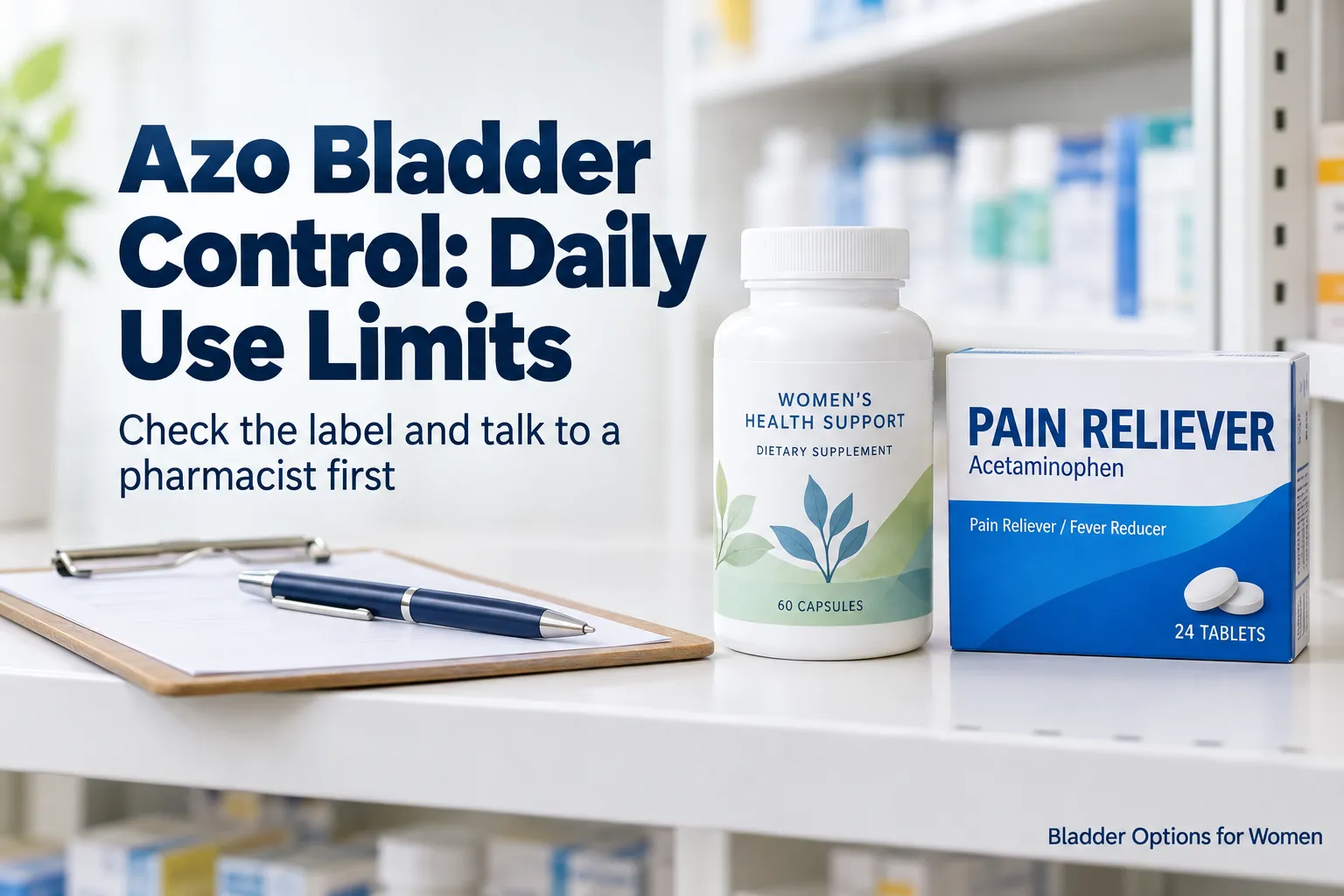
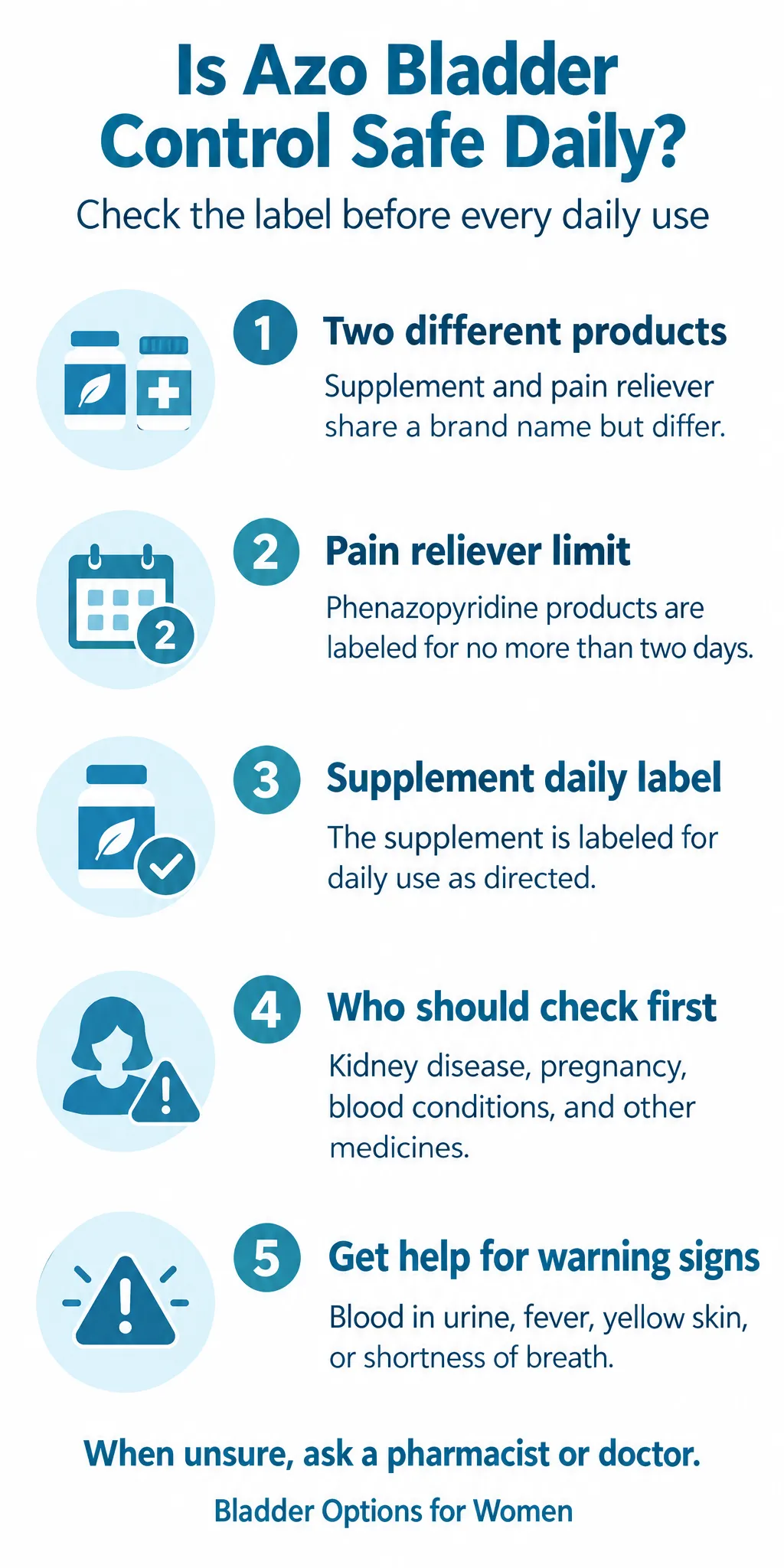
Azo Bladder Control is labeled for daily use as directed, but the Azo urinary pain relievers containing phenazopyridine are labeled for no more than two days without a doctor. Daily use is not suitable for everyone. People with kidney disease, pregnancy, certain blood conditions, or those taking other medicines should check with a doctor or pharmacist first. Symptoms such as blood in urine or fever need assessment, not self-treatment.
Some links on this site are affiliate links: if you buy through one, the site may earn a commission at no extra cost to you. More about this.
If you are waking up three or four times a night, or rushing to the bathroom so often that work and sleep suffer, you have probably already wondered whether a bottle from the pharmacy shelf could help without a doctor visit. That is a reasonable thing to want. The trouble is that "daily" and "safe for you" are not the same question, and the label does not answer the second one for your situation.
This page looks at what daily use actually involves, which medicines and health conditions change the picture, and when symptoms call for a clinician rather than a trial at home. Here is what the article covers:
- Label limits: what the packaging says about duration for each Azo product
- Medicine interactions: why blood pressure drugs and other prescriptions matter
- Conditions that rule out self-treatment: kidney, pregnancy, and blood-related concerns
- Warning symptoms: blood in urine, fever, and other signs that need assessment
- Who should check first: a practical way to decide before you start
Is Azo Bladder Control Safe to Take Every Day?
Short answer: the Azo Bladder Control supplement is labeled for everyday use as directed, and that is the main reason people ask whether it is safe to take every day. The name is the source of much of the confusion. "Azo" is also the brand behind pain relievers, and those are a different kind of product altogether.
Phenazopyridine pain relievers, sold under Azo branding in some markets, carry a label limit of two days. Their purpose is to ease burning, pain and urgency while an infection or irritation settles, not to be taken on a long-term schedule. The supplement and the pain reliever are not interchangeable, even though they share a brand name and sometimes appear on the same shelf.
That is why it helps to check the active ingredients on the box before you buy or take anything. Look for the words phenazopyridine or the name of a pain reliever. If you see them, you are looking at a short-term product with a different safety profile. If you see a list of plant extracts and vitamins, you are looking at a supplement. Please read the Drug Facts or supplement label each time, not just the front of the package.
The daily-use claim on the supplement label is the manufacturer's own statement. As far as I know, independent long-term safety data for taking this product every day is limited, so the label is the main guide you have. If you have a kidney condition, take blood pressure medicine, are pregnant or breastfeeding, or are already taking other medicines, talk with a doctor or pharmacist before adding it to your routine. For the details on reported side effects, see the separate page on Azo Bladder Control side effects.
Azo Bladder Control vs Azo pain reliever
| Product | Active ingredient | Label limit |
|---|---|---|
| Azo Bladder Control (supplement) | Plant extracts and vitamins | Labeled for daily use as directed |
| Azo pain reliever | Phenazopyridine | No more than two days without a doctor |
Why Phenazopyridine Has a Two-Day Limit
Azo Bladder Control is a product that does not treat the cause of overactive bladder. Its active ingredient, phenazopyridine, is a urinary pain reliever. It numbs the lining of the urinary tract, which eases burning, stinging and urgency-related discomfort while you take it. That is useful for short-term relief, but it is also the reason for the label limit.
Phenazopyridine does not treat infection and does not address why your bladder is overactive in the first place. Because it dulls pain, it can also mask the signs of a worsening urinary tract infection. If you feel better on the tablets while an infection is quietly getting worse, you may delay the visit that you actually need.
That is why the labels for pain-relief tablets say not to use them for more than two days without speaking to a doctor. The typical adult dose stated on these labels is one tablet three times a day after meals, and it is meant as a short course, not a daily habit. Please do not extend it because it seems to be helping.
Some people also notice orange or red urine. This is an expected and harmless effect of the drug, but it can stain clothing and contact lenses, so plan around it. If you notice pain, fever, blood you cannot explain, or symptoms that return once you stop, stop and see a doctor.
Side Effects and Warnings to Check First
Before you think about taking Azo Bladder Control every day, it helps to know what people commonly report and which symptoms mean you should stop and get medical help.
Commonly reported effects include nausea, stomach upset, headache and dizziness. Most people who have mild effects find them manageable, but if they persist or get worse, it is worth stopping and speaking to a pharmacist or doctor. The label is the authority here, so check the current label for the full list rather than relying on a summary, including this one.
Some warning signs are serious and call for urgent care. Get help straight away if you notice:
- Yellow skin or yellow eyes
- A blue or grey tint to your lips or nails
- Shortness of breath
- Very reduced urine output
Please do not wait to see whether these settle on their own.
It is also worth knowing that formulations and ingredients can differ between products sold under similar names, and strength and instructions may vary by country. Check the product's own label and the patient information leaflet in the box, rather than assuming what applies to one version applies to another. If anything on the leaflet conflicts with what you have read elsewhere, follow the leaflet and ask a pharmacist to clarify.
Who Should Avoid Azo Bladder Control
Azo Bladder Control contains phenazopyridine, a urinary pain reliever that is taken to ease burning and discomfort. Taking it every day is not something to start on your own without first checking your health history, because some people face real risks. If any of the following applies to you, please talk to a doctor or pharmacist before you take it, or avoid it altogether.
Who should not take it, or should check first:
- People with significant kidney disease or reduced kidney function. Your body clears phenazopyridine and its breakdown products through the kidneys, so impaired kidneys can let it build up in the body.
- Pregnant or breastfeeding women. Safety has not been established for these situations, so do not self-treat.
- Anyone with a known G6PD deficiency or certain blood disorders. Phenazopyridine can cause a type of anemia in people with these conditions, so this group should get medical advice first.
- Children. The product is designed for adults, and it should not be given to children without a doctor's direction.
- Anyone who has had an allergic reaction to phenazopyridine or a similar ingredient. Stop and seek care if you notice rash, swelling or breathing difficulty.
If you are unsure whether any of this describes you, your pharmacist can check the label ingredients against your medicines and conditions quickly. Daily use also deserves a conversation with a clinician, particularly if urgency or pain keeps coming back, since that can point to something that needs a proper assessment.
Who should check first
| Group | Main concern | Action |
|---|---|---|
| Significant kidney disease | Drug may build up in body | Talk to doctor first |
| Pregnant or breastfeeding | Safety not established | Do not self-treat |
| G6PD deficiency or blood disorders | Risk of anemia | Get medical advice first |
| Children | Designed for adults | Only on doctor's direction |
| Past allergic reaction | Risk of allergic response | Stop and seek care if reaction |
Interactions with Blood Pressure Medicines and Other Drugs
Daily use raises a practical question: what else are you taking, and could it interact with this product? Retail pages rarely list every possible interaction, so please don't rely on the label alone. Before you start a daily bladder product, bring a complete list of everything you take to a pharmacist. That includes prescription medicines, over-the-counter painkillers and cold remedies, and any supplements or herbal products. A pharmacist can check the combination against your own situation in a few minutes.
Some ingredients and medicines affect how the body processes other drugs. Blood pressure medicines are one of the most common reasons a pharmacist will look at a combination more closely, because several of them change how your blood vessels and kidneys handle fluid and pressure.
If you take blood pressure medicine, ask specifically about three things when starting any new product:
- Dizziness, especially when you stand up quickly
- Low blood pressure, which can cause light-headedness or fainting
- Kidney effects, since your kidneys help control both fluid balance and how drugs are cleared
I would make this a firm habit rather than a quick glance at the packet. A pharmacist's answer will tell you whether daily use makes sense for you, or whether your doctor should weigh in first. If you notice new dizziness after starting a product, stop it and speak to your pharmacist or doctor promptly. For a fuller look at side effects to watch for, see our page on Azo Bladder Control Side Effects.
When Daily Bladder Symptoms Need a Doctor, Not a Product
If you are thinking about taking Azo Bladder Control every day, it helps to first ask whether your symptoms are the kind that a doctor should look at before you choose any long-term product. Frequent urination and urgency can come from several causes, including urinary tract infections, bladder irritation, medication effects, diabetes, and nerve or pelvic floor problems. Some of these need treatment that a supplement cannot provide.
Please contact a doctor promptly if you notice any of the following:
- Blood in your urine
- Fever or chills along with urinary symptoms
- Pain in your back or side
- Symptoms that do not improve after a reasonable period
- New symptoms that are severe or come on suddenly
A doctor can test a urine sample for infection and check for other conditions before a daily product is considered. That step matters because a product that eases the feeling of urgency will not treat an infection or a more serious problem, and it may delay the right care.
When you book the appointment, or speak with a pharmacist, it can help to ask:
- Could my symptoms be caused by an infection, a medicine, or another condition?
- Is it safe for me to take an over-the-counter product every day, given my other medicines and blood pressure?
- Which ingredients are a concern for someone with my health history?
- What should I watch for, and when should I stop?
This guide is general information and does not replace individual medical advice. Your doctor or pharmacist knows your health history and can give you an answer that fits your situation.
What hands-on reviewers found
These are other people's hands-on tests, summarised and credited to them. Watch the full videos for their complete reviews.
Dr. Bri's Vibrant Pelvic Health: Uresta Review for Bladder Leaks and Pelvic Support 💖 Reusable, Over-the-Counter
Dr. Bri thinks Uresta is a practical, reusable, over-the-counter option that gives her mild prolapse support during activity, most comfortable at the smallest size, though it is not designed as a prolapse device and works best combined with
- The reviewer says she feels supported for her very mild prolapse when using Uresta, especially when constipated, though she does not experience bladder leaks. (at 8:23)
- She finds the smallest size, size three, works best for her, and says the sizing range lets users step up or down for more or less support. (at 10:10)
- She prefers Uresta because it is reusable, unlike Poise Impressa, which she says must be thrown away after each use and contains plastic. (at 10:44)
Frequently asked questions
How long should I take AZO Bladder Control?
The product label is the first place to check for how long to use it, and it should be followed as written. Azo Bladder Control is an over-the-counter product, so it is not designed for open-ended use. If your urinary symptoms have not improved within the period the label describes, or they return, it is a sign to stop and speak with a doctor.
What are the side effects of taking AZO Bladder Control?
Reported side effects can include changes in urine color, stomach upset, and symptoms that may differ from person to person. Because side effects vary, read the label carefully and check it against any other medicines you take. Stop using it and seek medical advice if you notice an unusual or severe reaction.
Is AZO Bladder Control healthy for you?
For many adults who use it as directed for a short period, it is considered low risk. However, healthy for one person does not mean suitable for everyone. Its suitability depends on your other medicines, existing health conditions, and whether your symptoms have a cause that needs a proper assessment first.
Is AZO Bladder Control safe for kidneys?
People with kidney disease or reduced kidney function should speak with a doctor before taking any urinary product, including this one. Kidney health affects how the body handles medicines, and a clinician can confirm whether it is appropriate for you. Do not rely on the product alone to decide this.
Who should avoid taking AZO Bladder Control?
Anyone who is pregnant or breastfeeding, takes blood pressure medicine, has heart, kidney, liver, or prostate conditions, or takes other prescription drugs should talk to a doctor or pharmacist first. Blood pressure and interaction concerns are the main reason to check before daily use. Sudden or severe symptoms also need a medical assessment rather than self-treatment.
Wrapping up
Daily use of Azo Bladder Control is best limited to what the label allows, and it is not a substitute for a medical check when symptoms are new, severe, or persistent. If you take blood pressure medicine or have kidney, heart, or prostate concerns, ask a doctor or pharmacist before using it every day.
Have you used Azo Bladder Control daily? Share in the comments how it went and whether you checked with a professional first.
If you want to read the full product details before deciding, Visit the official site and compare the label information with what your own doctor recommends.