Azo Bladder ControlOver-the-Counter Medicine for Overactive Bladder: What Is Available and How They Differ
Over-the-Counter Medicine for Overactive Bladder: What Is Available and How They Differ
The short answer
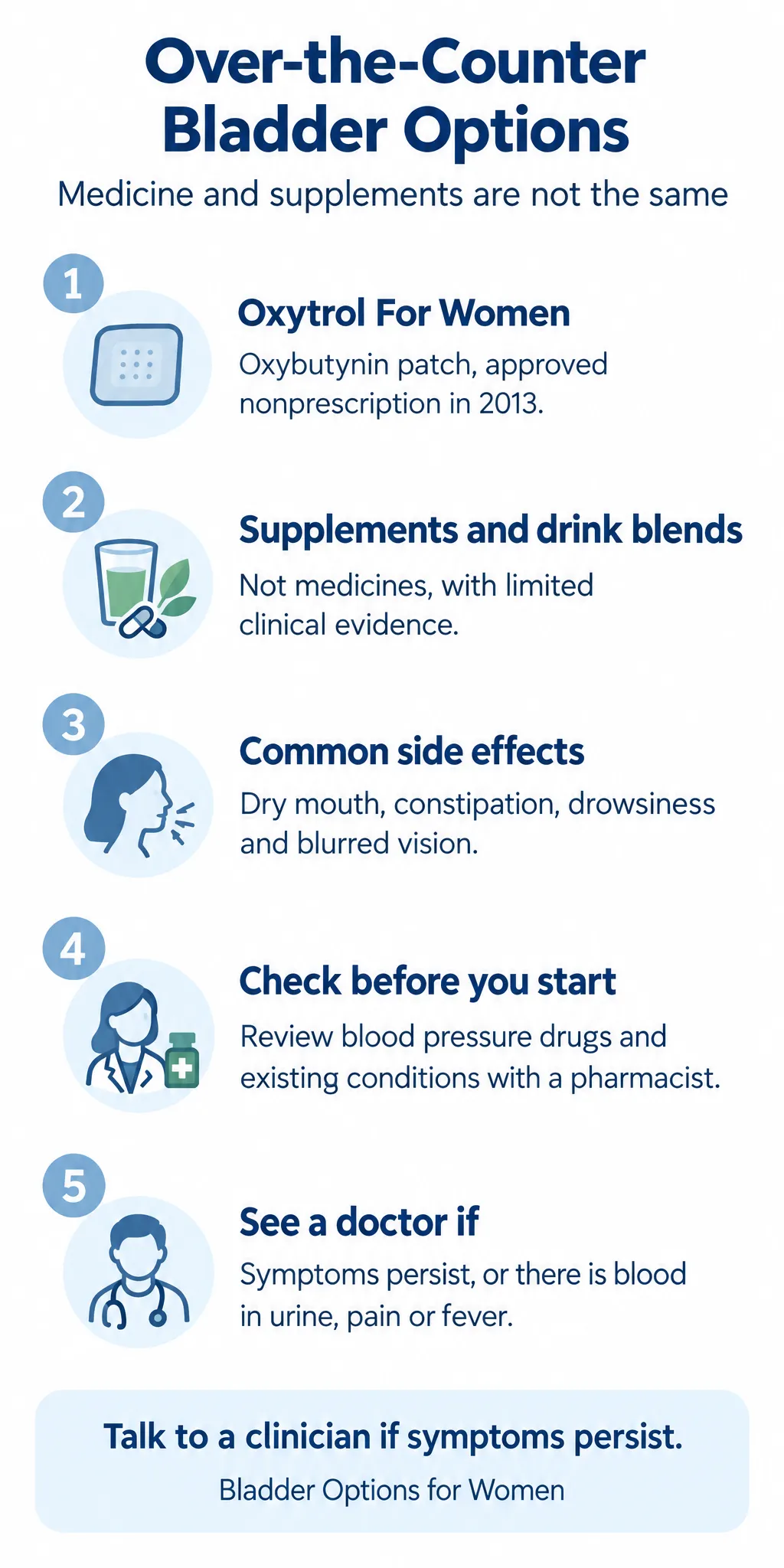
The main over-the-counter option for overactive bladder in the US is the oxybutynin transdermal patch sold as Oxytrol For Women, approved as nonprescription in 2013. Other products on shelves are supplements or drink-based blends, which are not medicines and have limited clinical evidence. Common side effects of bladder medicines include dry mouth, constipation, drowsiness and blurred vision. A doctor should be consulted if symptoms persist, or if there is blood in the urine, pain or fever.
Some links on this site are affiliate links: if you buy through one, the site may earn a commission at no extra cost to you. More about this.
- Oxytrol For Women: what the patch is, how it is worn, and who it suits
- Supplements and drink blends: what they are, and why they differ from medicines
- Side effects to expect: dry mouth, constipation, drowsiness and blurred vision, and what to check first
- Safety with other medicines: questions to raise about blood pressure drugs and existing conditions
- Reusable support devices: how one hands-on reviewer used a reusable insert for leaks during activity
- When to see a doctor: the symptoms that call for an assessment instead of self-treatment
If you have been waking several times a night, rushing to the bathroom at work, or planning your day around the nearest restroom, you already know how much overactive bladder can disrupt ordinary life. It is tiring, and it is easy to feel a little embarrassed about bringing it up. You deserve a clear answer about what you can try on your own before you book an appointment.
This guide gives you that answer in plain terms. We look at the over-the-counter options that exist, what each one is and is not, and how they differ in setup, typical side effects and who they tend to suit. We also cover where a prescription becomes the sensible next step, so you can make a decision you feel good about.
Over-the-counter bladder options at a glance
| Option | Best for | Form or wear | Key feature |
|---|---|---|---|
| Oxytrol For Women (oxybutynin patch) | Urge symptoms, nonprescription use | Transdermal patch on skin | Anticholinergic, approved nonprescription 2013 |
| Bladder control supplements and drink blends | Users wanting wellness-style aids | Capsules, powders, drinks | Not medicines, limited clinical evidence |
| Uresta (reusable pelvic support device) | Leaks during exercise or movement | Inserted in vagina during activity | Pinches urethra during exertion, not for prolapse |
What Overactive Bladder Is and Which Symptoms Matter
Overactive bladder, often shortened to OAB, is a pattern of symptoms rather than a single diagnosis. The bladder muscle contracts when it should not, or too readily, so the signal to go arrives early and strongly. Before you look at any treatment, it helps to check whether your symptoms actually fit that pattern.
The main symptoms are:
- Urgency: a sudden, strong need to pass urine that is hard to put off.
- Frequency: going to the toilet eight or more times in 24 hours, even when you do not drink much.
- Nocturia: waking one or more times a night to pass urine.
- Urge incontinence: leaking urine when a strong urge hits before you reach a toilet.
Several things can cause the same symptoms. A urinary tract infection is the most common, and it can bring urgency and frequency on its own. Bladder irritants, constipation, certain medications, high fluid intake, pregnancy, and pelvic floor problems can also play a part. This is one reason to get a clear picture before choosing a product. If you have pain, blood in your urine, fever, or symptoms that are new and getting worse, see a clinician instead of self-treating.
A bladder diary is a simple way to see what is happening. For three to five days, write down the time of each trip to the toilet, roughly how much you passed, any leaks, what you drank, and how urgent each urge felt. A diary gives a clinician far more to work with than memory, and repeating it later shows whether a change is actually working.
Over-the-Counter Options: Regulated Products vs Supplements
When you start looking at over-the-counter options for overactive bladder, it helps to split the shelf into two groups before comparing anything. The first group is a small number of regulated products that are approved for nonprescription use. The second, much larger group is supplements sold as bladder control aids. They are not the same kind of product, and they should not be judged by the same standard.
Is there a nonprescription medicine for overactive bladder?
Yes, but only one that we know of in the U.S. market. The oxybutynin transdermal patch has been approved for sale without a prescription. It is an anticholinergic, the same drug class as the prescription version, which works by calming the bladder muscle so urge symptoms come on less suddenly. Because it is an anticholinergic, it carries the usual side effect profile: dry mouth, constipation, blurred vision and drowsiness are the ones to watch for. The patch is applied to the skin, so you may also get local irritation where it sits.
What about the bladder control supplements?
Most products sold as bladder control aids are supplements, not drugs. Their labels describe ingredients and general wellness claims, but they do not show clinical trial results for the product itself. That does not mean they are useless, only that you cannot judge them the way you would a medicine. Read the label for what is actually in the capsule and whether the maker has any data on that exact formula.
Which prescription options are not available over the counter?
Several medicines used for overactive bladder need a prescription and are not sold over the counter. These include tolterodine, trospium, solifenacin, darifenacin and mirabegron. If one of these is recommended for you, a doctor will weigh the benefits against side effects and your other health conditions.
If your urinary symptoms are disrupting your days or nights, the next step is to talk with a doctor. Other pages in this hub cover treatment choices, and the section on when symptoms need a doctor's assessment explains what to bring to that visit.
Side Effects and Who Should Avoid Each Option
Before you start any over-the-counter product for overactive bladder, it helps to know what it can do to your body and whether it is a good fit for your situation. Many of these products are sold as harmless, but "over-the-counter" does not mean "without effects."
Side effects to watch for
- Dry mouth: the most common complaint, and usually the easiest to live with, though it can make sleep and eating less comfortable.
- Constipation: this matters most with daily use, since straining can put added pressure on your pelvic floor and make urinary symptoms feel worse.
- Drowsiness: important if you drive, work with machinery or take it at night on a regular basis.
- Blurred vision: stop and speak to a pharmacist or clinician if this happens.
- Skin irritation from patches: redness or itching at the application site is worth reporting, and you should rotate sites as the label directs.
For daily use, constipation and drowsiness tend to have the biggest impact on everyday life.
Check interactions and existing conditions first
Ask a pharmacist to review your full list of medicines, including other over-the-counter products and supplements. This is especially important if you have glaucoma, a history of urinary retention, or take blood pressure medication. Tell them about any kidney or liver problems too.
Women and older adults may notice differences
Side effects from bladder medicines can vary between women and older adults, and older women may be more sensitive to drowsiness and confusion. Report anything unusual to your clinician. Their feedback helps them decide whether to adjust your treatment or try something different.
Lifestyle, Pelvic Floor Work and Diet as First Steps
Most women with overactive bladder symptoms can start with free or low-cost approaches before spending anything on a product. They are worth trying because they carry little risk, though results vary.
What can I do at home without buying anything?
Three habits are the usual starting point:
- Bladder training: Rather than rushing to the toilet at the first urge, you wait a few minutes, breathe slowly, and then go. Over time you extend the gap between trips.
- Scheduled voiding: You go to the toilet at set times, such as every two hours, whether or not you feel the urge. This can reduce the sense of urgency that builds up between visits.
- Pelvic floor muscle exercises: Contracting and relaxing the pelvic floor muscles, often called Kegels, can help with urgency and leaks for some women. Done properly, it is a slow squeeze held for several seconds, not a bearing-down movement.
Expect to practise daily for several weeks before judging whether these help. Changes often come gradually, and giving up after a few days is the most common reason people think they did not work.
Do caffeine, fluids and alcohol make it worse?
They are common triggers for many women, so it is reasonable to notice how you feel after coffee, tea, fizzy drinks, or wine. Some people find that spreading fluids through the day and drinking less in the evening helps with night trips. Cutting these out will not necessarily fix your symptoms, though, and you should not cut back so far that you become dehydrated.
What about vitamins and minerals?
Some clinics suggest getting vitamin D, magnesium or vitamin C through food, such as oily fish, leafy greens, nuts and citrus fruit. Eating these foods is sensible in general. The evidence that supplements at typical doses help overactive bladder is limited, so they should not be relied on as a treatment.
Reusable Pelvic Support Devices for Leakage During Activity
Reusable pelvic support devices are one over-the-counter category that most overactive bladder guides skip. Uresta is one example. It is sold without a prescription and is designed to be worn in the vagina during activity, not all day. Think of it as an option for the moments when you know a walk, run or workout is likely to bring on leakage.
Dr. Bri's Vibrant Pelvic Health review is a useful place to start. In her review of Uresta, Dr. Bri says the device is not designed as a prolapse support device. She describes it as meant for bladder leaks, which she says it helps by pinching off the urethra during exertion. That distinction matters, because a device built for one purpose may not suit another.
How you might use it, based on her approach:
- Use a water-based lubricant on the device. Dr. Bri advises against oil-based products on the outer area before insertion, since they can make the labia too slippery to handle.
- Insert it at roughly a 45 degree angle, with the tab just inside the vaginal entrance. Once it is placed correctly, you should not feel it.
- Wear it during activities such as walks or runs rather than all day. She says she can still pee with it in place.
- Choose the size carefully. Dr. Bri found the smallest size, size three, worked best for her.
Who is this a good fit for?
If your overactive bladder symptoms mainly show up as leaks during exercise or movement, a device like this may be worth discussing with your doctor first. Some people also need to know what the device will not do. It is not a treatment for the urge itself, and it will not address the frequent trips to the bathroom that come from the urge alone. If your urges are constant, a medication such as oxybutynin or a pelvic floor muscle program may be a better next step.
When to Stop Self-Treating and See a Doctor
Over-the-counter products and bladder habits can help with mild urge symptoms, but they should not replace a proper assessment for long. If you have been trying OTC options or lifestyle changes for several weeks and your symptoms have not improved, or if they are getting worse, it is time to book a visit. Waiting longer can delay a diagnosis of something that needs a different approach.
Some symptoms need prompt medical attention rather than a trial at home. See a doctor quickly if you notice:
- Blood in your urine, or urine that looks red, pink or cola-coloured
- Pain in your lower abdomen, back or side, or pain when you pass urine
- A fever, chills or feeling generally unwell alongside urinary symptoms
- Sudden weakness, numbness or tingling, especially in your legs
- New incontinence together with neurological symptoms such as changes in bowel control or trouble walking
A prescription workup usually starts with a conversation about your symptoms, a urine test, and often a bladder diary that records how often you pass urine and how much you leak. Your doctor may also check your pelvic floor muscle strength and rule out other conditions that mimic overactive bladder.
If over-the-counter measures and lifestyle changes are not enough, prescription medications are the usual next step. The main options are anticholinergics, such as oxybutynin, and beta-3 agonists. Your doctor can explain how each one works, what side effects to expect, and which one suits your health history. Our overview of treatment options for women covers how these medicines compare with other approaches.
What hands-on reviewers found
These are other people's hands-on tests, summarised and credited to them. Watch the full videos for their complete reviews.
Dr. Bri's Vibrant Pelvic Health: Uresta Review for Bladder Leaks and Pelvic Support 💖 Reusable, Over-the-Counter
Dr. Bri thinks Uresta is a practical, reusable, over-the-counter option that gives her mild prolapse support during activity, most comfortable at the smallest size, though it is not designed as a prolapse device and works best combined with
- The reviewer says she feels supported for her very mild prolapse when using Uresta, especially when constipated, though she does not experience bladder leaks. (at 8:23)
- She finds the smallest size, size three, works best for her, and says the sizing range lets users step up or down for more or less support. (at 10:10)
- She prefers Uresta because it is reusable, unlike Poise Impressa, which she says must be thrown away after each use and contains plastic. (at 10:44)
Frequently asked questions
What are the treatment options for irritable bladder?
Treatment usually starts with lifestyle changes such as bladder training, timed voiding, and cutting back on caffeine and alcohol. Pelvic floor exercises come next, followed by prescription medicines that calm bladder muscle contractions. Some people also try over-the-counter products, but their evidence is thinner, so a doctor is worth seeing if symptoms persist.
Can Oxytrol be used by men?
Oxytrol is an oxybutynin patch, and it is prescribed for overactive bladder in adults of both sexes. Men with an enlarged prostate may have trouble emptying their bladder completely, so they usually need a doctor to check for that before starting any bladder-relaxing medicine. Oxytrol is not sold as an over-the-counter product in most places, so a prescription is required.
Does azo help with overactive bladder?
Azo Bladder Control contains ingredients that are marketed for urinary comfort, but it is not a prescription treatment and it has not been shown in strong clinical trials to fix overactive bladder. Some people report feeling better, while others notice no change. If urgency or frequent trips to the toilet are disrupting your day, it is sensible to talk with a doctor rather than rely on it alone.
What medicine to take for an overactive bladder?
The most common prescription medicines are antimuscarinics such as oxybutynin, tolterodine, and solifenacin, and beta-3 agonists such as mirabegron. Over-the-counter choices are limited and mostly supplements or urinary comfort products with weaker evidence. Which medicine suits you depends on your other health conditions and medications, so a doctor or pharmacist should help you choose.
What are the treatment options for an overactive bladder?
Options range from behavior changes like scheduled bathroom trips and fluid timing, to pelvic floor exercises, to medicines and nerve-based therapies for cases that do not improve. Over-the-counter products sit between self-care and prescriptions, and they tend to suit mild symptoms. If urgency, leaks, or night waking keep coming back, a clinical assessment is the right next step.
Wrapping up
Over-the-counter bladder products are a low-effort place to start for mild symptoms, but they rarely match the evidence behind prescription treatment. Check ingredients and side effects against your current medicines, and do not let a product delay seeing a doctor if symptoms are persistent. What has helped you, or what would you like to know before trying an over-the-counter option? Share your experience in the comments. Visit the official site if you want the product details and can then check them with your doctor or pharmacist.