Azo Bladder ControlOveractive Bladder Treatment for Women: What Doctors Offer and When to Get Assessed
Overactive Bladder Treatment for Women: What Doctors Offer and When to Get Assessed

The short answer
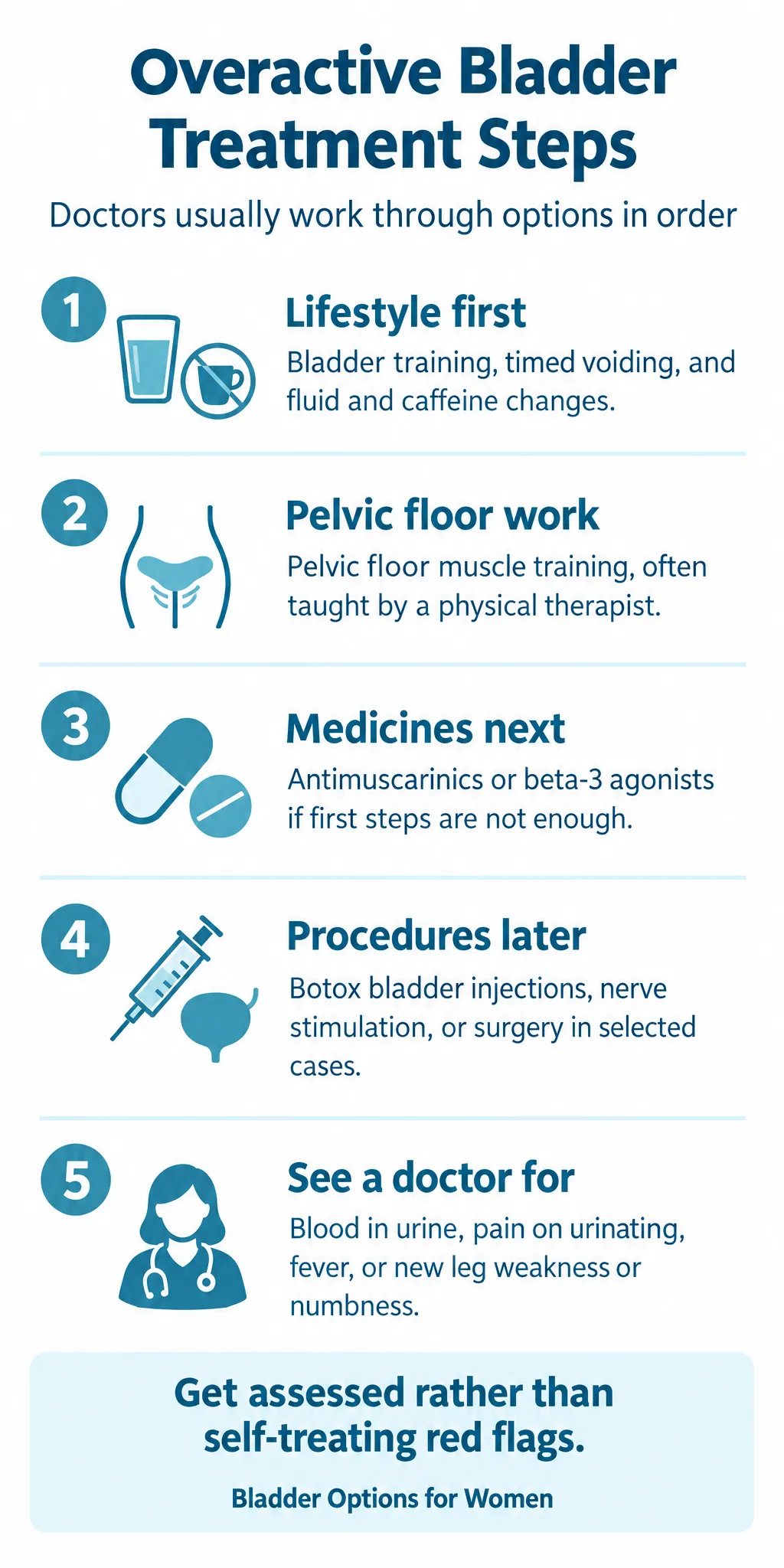
Overactive bladder in women is usually treated in steps, starting with lifestyle changes, fluid and diet adjustments, bladder training and pelvic floor exercises. If these do not help enough, a doctor may prescribe medicines that calm bladder muscle contractions, and in some cases recommend Botox injections, nerve stimulation or surgery. Blood in the urine, pain on urinating, fever, or new weakness or numbness need prompt assessment rather than self-treatment.
Some links on this site are affiliate links: if you buy through one, the site may earn a commission at no extra cost to you. More about this.
- Stepwise options: what doctors usually try first, and why it comes before medication
- Prescription routes: the main medicine classes, Botox, nerve stimulation and surgery, and who they tend to suit
- Over-the-counter and supplement claims: what to check before you spend money on them
- Warning signs: the symptoms that mean stop self-treating and book an assessment
- Where a reusable device fits: a hands-on reviewer's experience with one over-the-counter option, and its limits
If you are reading this because the urges have started to run your day, you are not overreacting, and you are not stuck with it. Frequent trips to the toilet, sudden urges and night-time waking can wear down your work, your sleep and your confidence, and many women put up with them for far too long before asking for help. Our aim here is to give you a plain, honest comparison so you can decide what to try and when to see someone. Along the way, we will look at how doctors work through treatment, which medicines are commonly prescribed and what they can cause, and how over-the-counter products and natural options compare on the evidence. We will also set out the red-flag symptoms that mean you should stop self-treating. Bladder Options for Women is a focused guide, so where a topic deserves more depth, we point you to the relevant page in this hub.
What Overactive Bladder Is and What Causes It
Overactive bladder, often shortened to OAB, is a group of symptoms rather than a single disease. The bladder muscle contracts when it should not, so you feel a sudden, strong need to urinate. The main symptoms are:
- Urgency: a sudden, hard-to-delay need to pass urine.
- Frequency: going to the toilet eight or more times in a day.
- Nocturia: waking one or more times at night to urinate.
- Urge incontinence: leaking urine when the urge hits before you reach a toilet.
Overactive bladder is different from stress incontinence. Stress incontinence means leaking when you cough, sneeze, laugh or lift, because pressure on the bladder overwhelms the pelvic floor. With overactive bladder, the leak follows a strong urge, even when there is no pressure at all.
What causes overactive bladder in women?
Several factors raise the risk:
- Age: symptoms become more common as you get older.
- Menopause: falling oestrogen thins the tissues of the bladder and urethra, which can intensify urgency.
- Pregnancy and childbirth: these stretch and strain the pelvic floor muscles and nerves.
- Neurological conditions: multiple sclerosis, Parkinson's disease, stroke and spinal injuries can disrupt the signals between brain and bladder.
Before you assume overactive bladder, rule out other causes. A urinary tract infection, bladder stones, certain bladder irritants, diabetes and some medicines can produce the same urgency and frequency. A simple urine test helps your doctor sort this out, and treatment for the actual cause often clears the symptoms.
Red Flags: When to Stop Self-Treatment and See a Doctor
Most overactive bladder symptoms are annoying rather than dangerous, and many women manage them well with lifestyle changes or treatment prescribed by a clinician. But some signs mean you should stop trying to fix things yourself and get an assessment. A bladder problem can sometimes be a sign of infection, a neurological problem, or another condition that needs a proper diagnosis.
Get assessed if you notice any of these:
- Blood in your urine, even once
- Pain or burning when you urinate
- Fever, chills, or flank (side or back) pain
- A sudden change in your usual pattern, such as a rapid rise in urgency or leaking that starts overnight
- New incontinence together with leg weakness, numbness, or numbness in the area around your genitals and inner thighs (saddle numbness)
- A feeling of heaviness in your pelvis, or a bulge you can see or feel at the vaginal opening
Also book a visit if:
- Your symptoms are new after age 50
- Symptoms do not improve after a few weeks of self-care, such as bladder training, fluid timing, and pelvic floor muscle exercises
What if I have severe symptoms?
Seek same-day or emergency care if you have severe pelvic or abdominal pain, cannot pass urine at all, or become confused. These can point to a blocked bladder or a serious infection that may spread. Over-the-counter products are not a substitute here. They cannot clear a blockage or treat a serious infection, so delaying care to try a supplement can make things much worse.
Once you have been assessed, your clinician can talk you through the treatment routes that suit your situation. You can compare these in the hub guide to overactive bladder treatment options.
How a Clinician Diagnoses Overactive Bladder
Most women with overactive bladder symptoms start with a conversation. Your clinician will want to know how often you need to urinate during the day and night, how sudden the urge is, whether you leak before you reach the toilet, and how long these symptoms have been going on. They will also ask about medications, previous surgery, pregnancies, childbirth, and any other conditions you have. Being specific helps more than being brief.
Keeping a bladder diary
Many clinicians will ask you to keep a bladder diary for three days or so. Write down, at the time:
- What and how much you drink, including tea, coffee and water
- Each time you pass urine, and roughly how much
- Any leaks, and what you were doing when they happened
- How strong the urge felt, on a simple scale
A diary turns vague memories into real patterns, and it is one of the most useful things you can bring to an appointment.
Testing your urine
A urinalysis checks a sample for signs of infection or blood. Urinary tract infections can cause urgency and frequency that look like overactive bladder, so ruling them out comes first.
When further tests are used
If your symptoms do not settle or the picture is unclear, your clinician may measure residual urine, meaning how much remains in your bladder after you empty it, usually with a quick bladder scan. A pelvic examination helps check the pelvic floor muscles, support and any prolapse. These checks help decide which treatments are likely to suit you.
Before your appointment
- Bring your completed bladder diary
- List every medicine, supplement and over-the-counter product you take, with doses
- Note your known triggers, such as caffeine, alcohol, cold weather or particular times of day
Treatment Routes a Doctor Will Consider, in Order
Doctors usually work through overactive bladder treatment in steps, starting with the least invasive option and moving on only if symptoms persist. Most people begin with changes they can make themselves.
Where do I start? First-line options
- Bladder training: You gradually stretch the time between trips to the toilet, using the urge to urinate as something to resist for a few minutes at a time.
- Timed voiding: You pass urine on a fixed schedule, often every two to three hours, rather than waiting for the urge.
- Pelvic floor muscle training: Exercises that strengthen the pelvic floor muscles are often taught by a physical therapist, who can check you are contracting the right muscles.
- Fluid and caffeine adjustments: Cutting back on caffeine, alcohol and very large fluid volumes can ease urgency for some women, while staying hydrated still matters.
What if these are not enough? Second-line medicines
If first-line steps do not help enough, a doctor may prescribe an antimuscarinic or a beta-3 agonist. Antimuscarinics commonly cause dry mouth, constipation, drowsiness and blurred vision. Beta-3 agonists tend to cause fewer of these, but can raise blood pressure, so your doctor will check your blood pressure and current medicines for interactions first.
When are procedures considered? Third-line options
- onabotulinumtoxinA bladder injections: Given into the bladder wall, usually under local anaesthetic, with a risk of needing to self-catheterise for a time.
- Sacral or tibial nerve stimulation: A mild electrical stimulus to the nerves that control the bladder, given over a course of sessions.
- Surgery: Reserved for selected cases after other routes have been tried.
Each option carries a different risk profile, so the choice is made case by case with your clinician. Over-the-counter products, including the reusable device Dr. Bri covers in her "Uresta Review for Bladder Leaks and Pelvic Support" video, sit outside this clinical sequence and are a separate decision. For a fuller comparison, see the hub page on overactive bladder treatment options.
Common side effects of bladder medicines
| Medicine class | Common effects | Points to note |
|---|---|---|
| Antimuscarinics | Dry mouth, constipation, drowsiness, blurred vision | Commonly prescribed second-line medicines |
| Beta-3 agonists | Fewer of the antimuscarinic effects | Can raise blood pressure; doctor checks first |
Treatment routes at a glance
| Route | Typical stage | Key point |
|---|---|---|
| Bladder training | First-line | Gradually stretch time between toilet trips |
| Timed voiding | First-line | Pass urine on a fixed schedule |
| Pelvic floor muscle training | First-line | Often taught by a physical therapist |
| Antimuscarinics or beta-3 agonists | Second-line | Prescribed medicines; check side effects |
| Botox bladder injections | Third-line | Given into the bladder wall |
| Nerve stimulation | Third-line | Course of sessions |
| Surgery | Third-line | Selected cases only |
Trying Over-the-Counter Options Safely
Many women want to avoid prescriptions and look for an over-the-counter option first. That is a reasonable starting point for mild, stable symptoms, such as occasional leaks or an urge that comes on now and then without disrupting your day. It becomes a poor choice when symptoms are new, getting worse, or accompanied by warning signs.
Before you try anything, see a clinician first if you notice any of these:
- Blood in your urine, or urine that looks dark or cloudy with a strong smell
- Fever, chills, or pain in your lower back or side
- Pain when you urinate that is new or severe
- Being unable to empty your bladder fully, or a weak or interrupted stream
- Sudden, severe changes in how often you go, especially at night
- Leaking that started after a fall, injury, or a new health problem
Once you have checked for these, take a few practical steps. Read the label and compare the ingredients against any medications you already take. A pharmacist can check for interactions and for conflicts with conditions such as high blood pressure, kidney problems, or prostate issues. Evidence for many over-the-counter products is mixed, so results vary, and a product that helped a friend may do little for you.
Some women use reusable pelvic support devices for leaks during activity. In Dr. Bri's Vibrant Pelvic Health review of Uresta, the reviewer described it as a practical, reusable, over-the-counter option for bladder leaks during activity, most comfortable at the smallest size. She noted it is not designed as a prolapse device, and that it works by pinching off the urethra during exertion. She uses it only during walks or runs, not all day. Pelvic floor muscle exercises and bladder habits may also help, and your clinician can talk you through those alongside any product you choose.
Questions Readers Ask and What to Expect Over Time
Does acupuncture help overactive bladder?
Some small studies suggest acupuncture may reduce urgency episodes for some women, but the evidence is limited and the trials are generally small and of mixed quality. It is not a standard first-line treatment, so if you try it, treat it as an addition to a plan your clinician has discussed with you, not a replacement for it.
Why do I need to urinate when I stand up?
Standing shifts fluid in the body and can increase pressure on the bladder. For some women with overactive bladder, that change is enough to trigger a sudden urge. If you notice it happening often, mention it at your appointment, because it can help your clinician understand your symptom pattern.
What is the difference between overactive bladder and urge incontinence?
Overactive bladder is a set of symptoms: urgency, frequency and sometimes waking at night to urinate. Urge incontinence is one of those symptoms, where the urgency is strong enough that you leak before you reach the toilet. Not everyone with overactive bladder leaks, and the leaking can be a sign that the symptoms are more intense.
How long do bladder training and pelvic floor exercises take to work?
Most women need several weeks of consistent practice before they notice a change. Pelvic floor muscles are trained like any other muscles, and a bladder retraining plan works by slowly stretching the time between trips to the toilet. Keep going for a few weeks before deciding whether it is helping.
How long before medications are judged to work?
Medicines are usually reviewed after a trial period that your clinician sets with you, often several weeks. Do not stop or start a medicine on your own because you feel no difference in the first few days, and do not assume a medicine has failed without giving it the agreed time.
What does follow-up look like?
Typically you will:
- Review your bladder diary, which records fluid intake, urination times, urgency and any leaks
- Discuss how your symptoms have changed since the last visit
- Adjust the dose or the treatment if needed
- Move to the next line of treatment if the first option has not helped
If you are comparing products before seeing a doctor, you can read more in our guides on side effects, safety and evidence. Those guides are not a substitute for a clinical assessment, and if your symptoms are severe, sudden, or come with blood in your urine, fever or pelvic pain, see a doctor promptly rather than trying products first.
What hands-on reviewers found
These are other people's hands-on tests, summarised and credited to them. Watch the full videos for their complete reviews.
Dr. Bri's Vibrant Pelvic Health: Uresta Review for Bladder Leaks and Pelvic Support 💖 Reusable, Over-the-Counter
Dr. Bri thinks Uresta is a practical, reusable, over-the-counter option that gives her mild prolapse support during activity, most comfortable at the smallest size, though it is not designed as a prolapse device and works best combined with
- The reviewer says she feels supported for her very mild prolapse when using Uresta, especially when constipated, though she does not experience bladder leaks. (at 8:23)
- She finds the smallest size, size three, works best for her, and says the sizing range lets users step up or down for more or less support. (at 10:10)
- She prefers Uresta because it is reusable, unlike Poise Impressa, which she says must be thrown away after each use and contains plastic. (at 10:44)
Frequently asked questions
Can acupuncture help with overactive bladder?
Some small studies suggest acupuncture may reduce urgency and frequency in some women, but the evidence is limited and mixed. It is generally considered a complementary option rather than a replacement for medical assessment. If you try it, tell your doctor, and keep seeing a clinician if your symptoms do not improve.
Why do I urinate when I stand up?
Standing can shift fluid in the body and change pressure on the bladder, which may prompt an urge to pee in some people. In women with overactive bladder, the urge can feel sudden and strong on standing. If it happens often, or comes with leaks, pain or blood in the urine, get it checked by a doctor.
Is overactive bladder the same as urge incontinence?
Not exactly. Overactive bladder is the broader term for sudden, hard-to-control urges to urinate, often with frequent trips to the toilet and night waking. Urge incontinence is one symptom within it, meaning leaking urine when the urge hits before you reach a toilet.
What can you use to stop frequent urination?
Common options include prescription bladder-relaxing medicines, certain nerve-focused treatments, and lifestyle steps such as limiting caffeine and alcohol and practicing bladder training. Over-the-counter products are available but vary in evidence. Because frequent urination can also come from infection, diabetes or other conditions, a doctor should confirm the cause before you rely on any treatment.
How do I know when I should see a doctor for overactive bladder?
See a doctor if you notice blood in your urine, pain or burning when you pee, fever, sudden changes in bladder habits, weakness or numbness in the legs, or trouble emptying your bladder fully. Also seek care if symptoms are disrupting sleep or daily life for several weeks despite self-care. These signs can point to something needing diagnosis rather than self-treatment.
Wrapping up
Overactive bladder is common and treatable, but the right route depends on the cause, and some warning signs mean self-treatment should stop. If urgency, leaks or frequent trips are affecting your life, book an assessment rather than guessing. Have you found a treatment that helped, or a symptom that made you see a doctor? Share your experience in the comments.
Visit the official site for more information.