Azo Bladder ControlNatural Remedies for Overactive Bladder: What Has Evidence and What Does Not
Natural Remedies for Overactive Bladder: What Has Evidence and What Does Not
The short answer
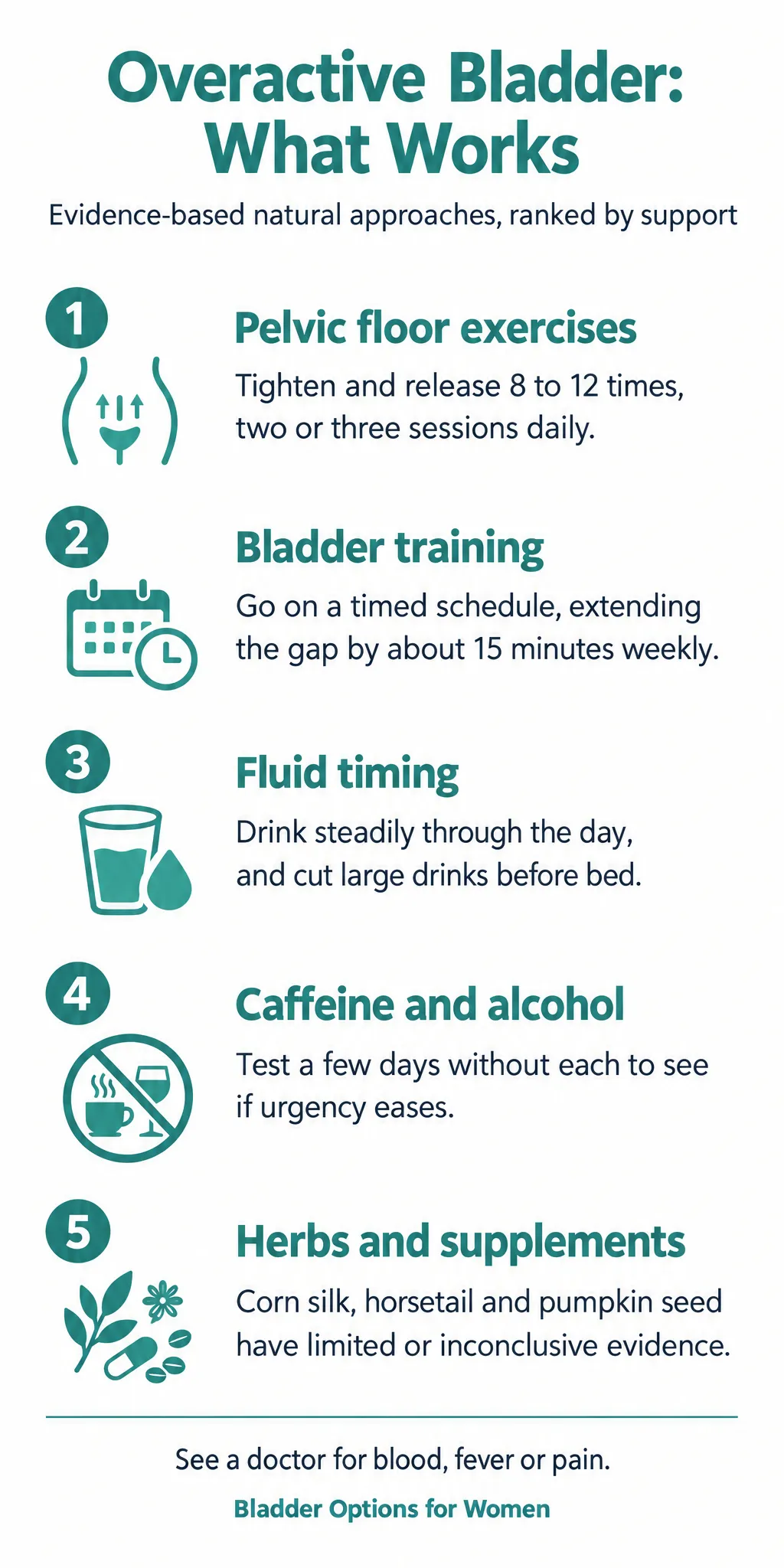
The natural approaches with the most support for overactive bladder are pelvic floor muscle training, bladder training, and adjusting fluids and bladder irritants such as caffeine and alcohol. These changes can reduce urgency and frequency for many women. Most herbal and supplement options, including corn silk, horsetail and pumpkin seed, have limited or inconclusive clinical evidence. Symptoms such as blood in the urine, fever or pain need medical assessment.
Some links on this site are affiliate links: if you buy through one, the site may earn a commission at no extra cost to you. More about this.
If you are waking up two or three times a night, rushing to the bathroom before a meeting, or planning your day around where the nearest toilet is, you already know how much this condition gets in the way. It is tiring, and it is easy to feel that you have to simply put up with it. Many women do not raise it with anyone, which makes it harder to find out what actually helps.
This page gives you a clear, honest look at the natural and lifestyle approaches people try most often. You will see which ones have reasonable support in research, which have weak or mixed results, and which have little evidence behind them at all. Along the way we explain how each approach works, what to expect, and what side effects or safety concerns to keep in mind.
Here is what the rest of this article covers:
- Pelvic floor muscle training: how the exercises are done, and how long they usually take to show a difference.
- Bladder training: the timed voiding method and how to build it up gradually.
- Fluid and irritant changes: what to adjust around caffeine, alcohol and drink timing.
- Herbal and supplement options: what the clinical evidence shows for corn silk, horsetail and pumpkin seed.
- Signs that need a doctor: the symptoms that call for assessment rather than self-treatment.
What Overactive Bladder Is and Which Symptoms Suit Self-Management
Overactive bladder is a common condition in which the bladder muscle contracts when it shouldn't, so the urge to pass urine arrives suddenly and often. It affects women of all ages, and many people put up with it for years before they talk about it.
The main symptoms are:
- Urgency: a strong, sudden need to urinate that is hard to delay.
- Frequency: going to the toilet more often than you would like, often eight times or more in a day.
- Nocturia: waking one or more times at night to pass urine, which can disrupt sleep.
- Urge incontinence: leaking urine when the urge hits before you reach the toilet.
If your symptoms are mild and you have no warning signs, it is reasonable to start with self-management. Lifestyle changes such as adjusting fluid timing, reducing caffeine and doing pelvic floor exercises are often the first step, and they work best when you give them several weeks. Many women find this helps, but these measures do not replace medical advice, and a doctor can rule out other causes such as urinary infection or diabetes.
Seek a medical assessment promptly if you notice:
- Blood in your urine
- Fever, chills or back pain
- Pain or burning when you pass urine
- A sudden change in your symptoms
- Weakness, numbness or loss of bladder control that is new
Lifestyle Measures With the Strongest Support: Fluids, Caffeine and Alcohol
Lifestyle changes are often the first thing a doctor will suggest for overactive bladder, and they are one of the few approaches with reasonable support behind them. They cost little, carry almost no risk, and you can test them yourself.
Should you cut back on fluids?
Cutting your fluids sharply is one of the most common mistakes. Drinking too little concentrates your urine, can irritate the bladder, and raises the risk of constipation, which itself presses on the bladder. A more useful goal is steady intake through the day, spread out rather than gulped in large amounts.
Practical steps that many people find helpful:
- Keep drinking steadily through the morning and afternoon.
- Reduce large drinks in the two or three hours before bed, so you are not waking to pass urine.
- Use a bottle you can track if that helps you stay on pace.
How do caffeine and alcohol affect your bladder?
Both caffeine and alcohol can irritate the bladder lining and increase urgency in some people. Not everyone reacts the same way, so the simplest way to find out is to test it. Try a few days without coffee, tea, cola or energy drinks, then notice whether urgency and trips to the toilet ease. Repeat the process with alcohol. If you see a clear difference, you have learned something useful about your own body.
What can you drink instead?
Good swaps include:
- Plain water, or water with a slice of fruit.
- Caffeine-free herbal tea.
Be aware that some herbal teas can themselves be irritating, particularly those with peppermint, citrus or strong spice. If a new tea seems to make things worse, stop it and try a milder one.
Pelvic Floor Exercises and Bladder Training
Two behavioural methods have the most research behind them for overactive bladder symptoms in women: pelvic floor muscle exercises and bladder training. Neither is a quick fix, but both are low cost, have no drug side effects, and can be done at home.
How do I find and use my pelvic floor muscles?
The pelvic floor is the group of muscles that supports your bladder, bowel and uterus. A simple way to locate them is to imagine stopping the flow of urine midstream, or to tighten the muscles around the front and back passage as if holding in wind. Try this once or twice while sitting on the toilet so you know the right muscles, but do not make a habit of stopping your flow, as doing it often can interfere with emptying.
Once you can find them, practise this routine:
- Tighten the pelvic floor muscles and hold for about 5 seconds.
- Release fully and rest for about 5 seconds.
- Repeat 8 to 12 times, aiming for two or three sessions a day.
Gentle, steady contractions are more useful than hard squeezing. Most people notice a difference only after several weeks of regular practice, so consistency matters more than effort on any single day.
What is the quick flick and timed voiding?
The quick flick is a short, fast contraction, held for about a second, that you use when you feel an urge. It can help you get through a moment of urgency without rushing to the toilet.
Bladder training, or timed voiding, works differently. You use a fixed schedule rather than your urges. Start by noting how often you go now, then go to the toilet every 30 to 60 minutes whether or not you feel the need. Each week, gradually extend the gap by about 15 minutes, so over time your bladder can hold more comfortably. Stop extending if it becomes uncomfortable.
Will these exercises work, and should I get help?
Expect to practise for at least six to eight weeks before judging results. A physiotherapist, particularly one with pelvic health training, can check that you are contracting the right muscles and correct your technique. If symptoms are severe or do not improve, speak to your doctor, as other treatments are available. You can read more about this on other pages of this site.
Herbs, Supplements and Vitamins: What the Evidence Shows
Herbal and supplement products for overactive bladder are easy to find, but the research behind most of them is thin. When you look at these options, it helps to separate what has been tested in controlled studies from what people simply say worked for them.
Corn silk, horsetail, pumpkin seed and capsaicin are the ones you will see most often. For each of them, clinical evidence is limited or inconclusive. A few small studies have looked at pumpkin seed and some other botanicals, but they are generally too small or too short to show a reliable benefit. Quality also varies a lot between products. The amount of active ingredient can differ from one batch to the next, and some labels do not say what is actually inside. Horsetail, for example, can contain compounds that are not wanted in a daily supplement.
Can a vitamin deficiency cause frequent urination? There is no strong evidence that a vitamin deficiency causes excessive urination in most people. Likewise, no single vitamin has been shown to reliably reduce leakage. If a blood test shows a true deficiency, correcting it is sensible for your general health, but do not expect it to fix an overactive bladder.
Why reviews are not the same as trials. Forum posts and product reviews are useful for spotting what people try, but they cannot tell you whether a product worked or whether the person would have improved anyway. Bladder symptoms often come and go, so many people credit whatever they started last. A controlled trial compares a product against a placebo, which is the only way to separate real effects from chance.
Check before you start. Many supplements interact with medicines, including blood pressure drugs and blood thinners. Ask a pharmacist or doctor to review any product against your current prescriptions and health conditions before you take it.
Common approaches compared by evidence
| Option | Evidence | Note |
|---|---|---|
| Corn silk | Limited or inconclusive | Not stated |
| Horsetail | Limited or inconclusive | Can contain unwanted compounds |
| Pumpkin seed | Limited or inconclusive | Small, short studies |
| Capsaicin | Limited or inconclusive | Not stated |
| Vitamins (no deficiency) | No strong evidence | Not stated |
Contributing Factors Worth Checking: Weight, Smoking, Constipation and Pregnancy
Drinks and exercise are only part of the picture. Several everyday factors can make bladder symptoms worse, and some are easier to change than you might expect.
Does carrying extra weight affect my bladder?
It can. Extra weight, particularly around the abdomen, adds pressure to the bladder and pelvic floor, which can increase urgency and leaking. Gradual weight loss, often in the range of 5 to 10 percent of body weight, has been linked with fewer symptoms in studies of women with urinary incontinence. Losing weight slowly through regular meals and activity is usually more sustainable than crash dieting.
How does constipation play a part?
A full bowel presses on the bladder and can irritate the pelvic floor. Straining to pass stool adds further strain. Eating fibre with enough fluids, such as vegetables, fruit, beans and wholegrains, helps keep stools soft and regular. If constipation is persistent, talk to a doctor rather than relying on laxatives long term.
Can quitting smoking help my symptoms?
Smoking is associated with bladder irritation and a higher risk of urgency. The chronic cough it causes also puts repeated pressure on the pelvic floor. Quitting may ease symptoms for many people, and it brings wider health benefits too. Support is available through your GP or pharmacist.
What about bladder pressure during pregnancy and after childbirth?
Pregnancy and delivery can change bladder function, and the growing baby increases pressure on the bladder. Symptoms often ease after birth but can persist. Do not assume they are just part of having a baby. Raise changes in urination, leaking or urgency with your midwife or doctor, who can check your pelvic floor and suggest pelvic floor muscle training or other care.
If symptoms are disrupting your sleep, work or daily life, mention them directly and specifically, for example "I need to go six or seven times a night." That gives your clinician the detail needed to decide on the next step.
Running a Two-Week Trial and Knowing When to Get Help
If you want to test natural approaches for overactive bladder at home, start by keeping a simple bladder diary for three days. Write down what you drink and roughly how much, every caffeinated drink (tea, coffee, cola), every alcoholic drink, and each trip to the toilet, with the time. Note any sudden urges and whether you leaked. This gives you a realistic picture of your urinary habits before you change anything.
Which habit should I change first?
Pick one habit to change and stick with it. Cutting caffeine, timing your fluids so you drink most of them earlier in the day, or doing pelvic floor exercises are all reasonable starting points. Changing several things at once makes it impossible to know what helped.
- Week one: make one change and keep your diary going.
- Week two: keep the change, or drop it if it made no difference, and only then try a second change.
How do I judge whether it is working?
Do not judge progress day to day. Bladder patterns shift with what you eat, how much you sleep and how stressed you are. Look at your diary across two to four weeks and compare the number of trips, urgent episodes and leaks with your first three days. Be honest about the evidence: pelvic floor exercises and caffeine reduction have the most support, while many herbal teas and supplements have little good research behind them.
When should I see a doctor?
See a doctor if your symptoms persist after a fair trial, get worse, disturb your sleep or interfere with work and daily life, or come with red-flag signs. These include blood in your urine, pain or fever with urination, sudden inability to pass urine, or numbness around the genitals or back passage. Any of these needs prompt medical assessment, not self-treatment. Your doctor can also check whether a medicine is appropriate. For the medication options, see the hub page, Overactive Bladder Treatment Options for Women Compared, and our pages on over-the-counter medicines and bladder control supplements.
What hands-on reviewers found
These are other people's hands-on tests, summarised and credited to them. Watch the full videos for their complete reviews.
Dr. Bri's Vibrant Pelvic Health: Uresta Review for Bladder Leaks and Pelvic Support 💖 Reusable, Over-the-Counter
Dr. Bri thinks Uresta is a practical, reusable, over-the-counter option that gives her mild prolapse support during activity, most comfortable at the smallest size, though it is not designed as a prolapse device and works best combined with
- The reviewer says she feels supported for her very mild prolapse when using Uresta, especially when constipated, though she does not experience bladder leaks. (at 8:23)
- She finds the smallest size, size three, works best for her, and says the sizing range lets users step up or down for more or less support. (at 10:10)
- She prefers Uresta because it is reusable, unlike Poise Impressa, which she says must be thrown away after each use and contains plastic. (at 10:44)
Frequently asked questions
What vitamin deficiency causes excessive urination?
No single vitamin deficiency is a well-established cause of excessive urination. Frequent urination is far more often linked to fluid intake, caffeine, bladder irritation, urinary infection, diabetes or medicines such as diuretics. Vitamin D has been studied in relation to bladder symptoms, but the evidence is weak, so a blood test and a doctor's review are a better first step than supplementing on a guess.
How to relieve pressure on bladder when pregnant?
Small, practical changes often help: emptying the bladder fully each time, sitting up straight rather than slumping, and avoiding long periods of standing. Spreading fluid through the day and cutting back on caffeine can reduce urgency. Pelvic floor exercises are generally considered safe in pregnancy, but check with your midwife or doctor before starting, especially if you have bleeding, pain or leaking.
Is there a vitamin that helps with bladder leakage?
No vitamin has strong evidence for treating bladder leakage. Some people try vitamin D or B vitamins, but studies have not shown a clear benefit for overactive bladder. Pelvic floor muscle training, which is typically practised for several months, has much better evidence and should come before relying on supplements. Leakage that is sudden or new should be assessed by a doctor.
What drink is good for an overactive bladder?
Plain water is the most sensible choice, taken steadily through the day rather than in large amounts at once. Many people find that cutting back on coffee, tea, cola, alcohol and fizzy or acidic drinks reduces urgency. Some report that cranberry juice helps, but evidence for symptom relief in overactive bladder is limited. Avoid cutting fluids too far, as concentrated urine can irritate the bladder.
Do natural remedies for overactive bladder actually work?
Lifestyle changes such as adjusting fluid timing, reducing caffeine and doing pelvic floor exercises have the most support from research, though results vary between people. Many herbal and supplement products have little or no good evidence behind them. Because overactive bladder can share symptoms with infection, diabetes or other conditions, it is worth getting a proper assessment before relying on self-treatment.